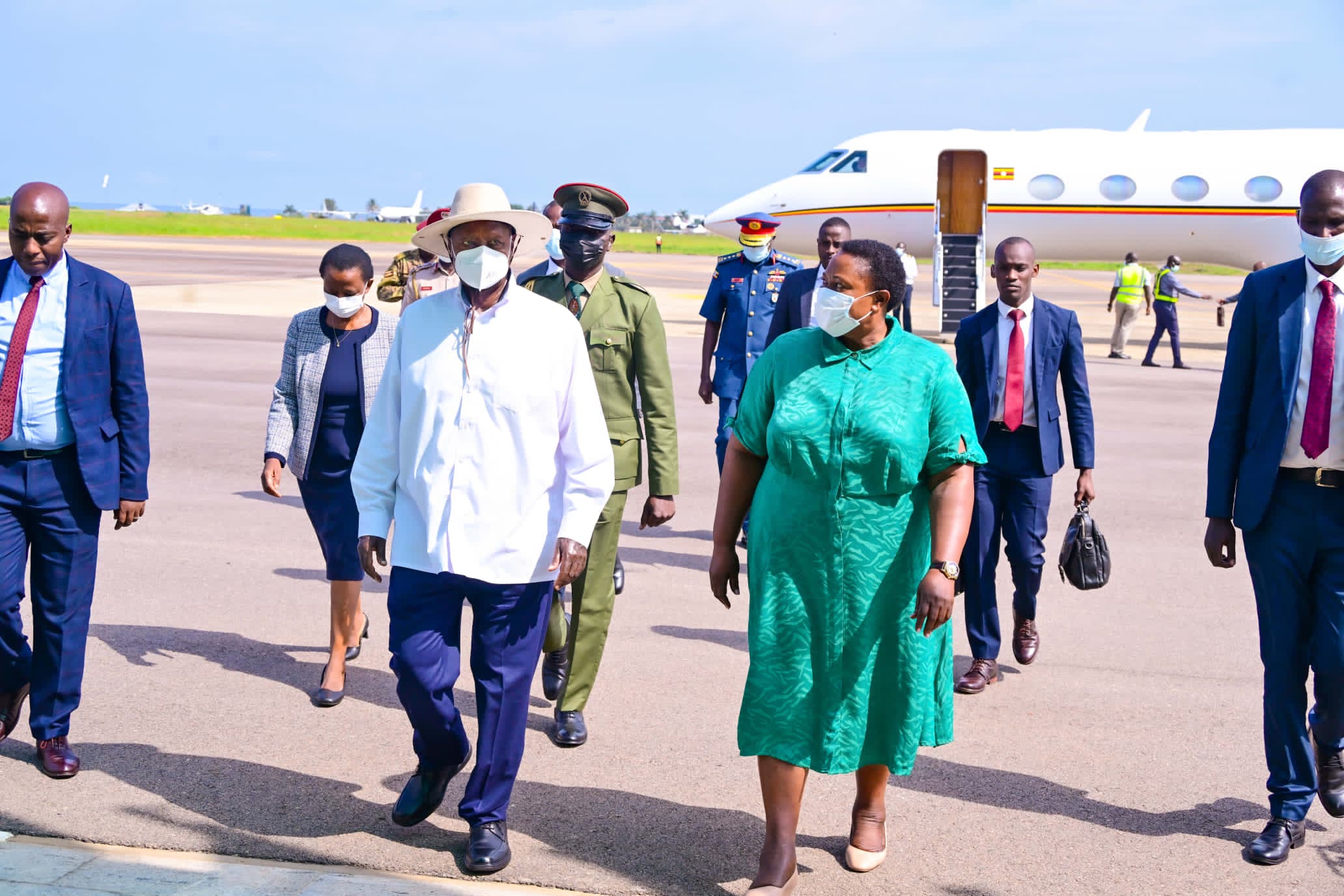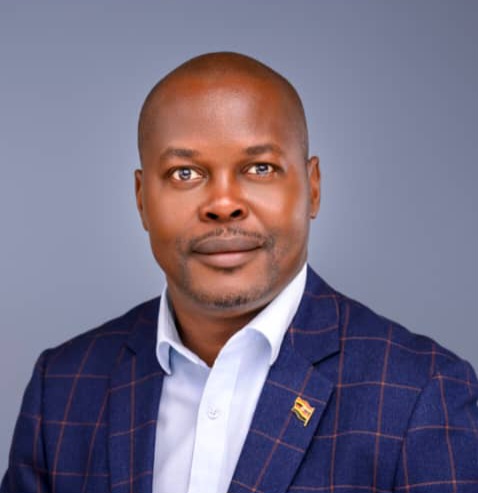

In a cabinet reshuffle that caught many Ugandans by surprise, President Yoweri Museveni on May 26, 2026 elevated two public figures with unconventional political journeys to lead the Ministry of Local Government.
Hon. Balaam Barugahara Ateenyi, previously serving as Minister of State for Youth and Children Affairs, was promoted to full Minister for Local Government, replacing Raphael Magyezi, who was dropped from Cabinet. Alongside him is Justine Nameere Nsubuga, the outspoken Masaka City Woman MP, appointed Minister of State for Local Government.
The appointments immediately triggered debate across political and social circles. Balaam and Nameere are widely known public personalities, though not necessarily for navigating the dusty administrative corridors of district local governments.
Balaam built his name as a flamboyant events promoter, businessman, music industry player, and youth mobiliser before crossing fully into mainstream politics. His influence among young people, entertainers, and urban networks made him one of the ruling party’s most visible mobilisers. Nameere, on the other hand, rose through the media industry as a lawyer and television host before transforming into a vocal NRM political activist and later a legislator. Her political rise, particularly in the fiercely contested Masaka political landscape, has been dramatic and closely watched.
Many expected the Local Government docket — historically managed by seasoned administrators and ideological heavyweights like Jaberi Bidandi Ssali and Adolf Mwesigye — to be handed to a technocrat or long-serving insider within government systems. Instead, Museveni appears to have opted for visibility, energy, mobilisation skills, and public connection.
The decision signals a calculated political strategy: inject fresh political enthusiasm and public-facing dynamism into a ministry that sits at the centre of grassroots service delivery, while technical officers handle the bureaucratic machinery behind the scenes.
Local governments remain Uganda’s true last-mile governance structures. It is at district and sub-county level where citizens judge government performance. Feeder roads, Health Centre IIIs, UPE schools, boreholes, agricultural extension services, garbage collection, and community mobilisation all fall within this ecosystem. National programmes such as the Parish Development Model (PDM), Emyooga, youth livelihood initiatives, and poverty eradication campaigns depend heavily on effective local coordination.
Yet the challenges are enormous.
Several districts continue to struggle with delayed conditional grants, weak supervision, procurement irregularities, poor accountability, and overstretched staffing structures. In some areas, local governments exist more on paper than in effective service delivery, leaving wananchi frustrated despite billions invested annually.
For Balaam and Nameere, the task ahead will require more than public excitement.
One of their biggest tests will be accelerating the effectiveness of PDM implementation. Many parish SACCOs continue to face challenges ranging from poor beneficiary selection and weak group structures to limited financial literacy and loan recovery difficulties. Their strong mobilisation backgrounds could help government reconnect directly with communities and revive confidence in wealth creation programmes.
The Emyooga initiative equally requires renewed energy, especially among youth, women, boda boda riders, artisans, and market vendors who still complain about limited access, politicisation, or poor coordination. If properly supervised, these initiatives can become real economic lifelines rather than campaign slogans.
Road infrastructure will also remain a major pressure point. District feeder roads are the arteries connecting farmers to markets, yet many become impassable during rainy seasons. Balaam’s aggressive and high-visibility style could increase pressure on local leaders and technical teams to respond faster to maintenance demands.
In health and education, the focus must shift from simply constructing buildings to ensuring functionality. Communities continue to complain about absentee teachers, understaffed health centres, drug shortages, and poor sanitation in schools. The new ministers will be judged by whether citizens actually feel improvements in daily life.
Nameere’s media and communication background could become a major asset. One of government’s long-standing weaknesses has been poor grassroots communication. Many citizens either do not understand government programmes or receive distorted information through political propaganda. Through radio engagement, digital outreach, community meetings, and public accountability forums, she could help simplify policy communication and improve citizen engagement.
Working closely with Resident District Commissioners, Chief Administrative Officers, LC5 chairpersons, town clerks, and technocrats will however be critical. Local government systems are deeply bureaucratic and often resistant to change.
Still, skepticism remains.
Critics argue that celebrity-style politics and media popularity may not necessarily translate into managing decentralisation policy, complex budgeting systems, or tackling entrenched corruption networks within local administrations. Others question whether the ministry risks becoming more about visibility than structural reform.
The “socialite” label attached to Balaam especially continues to divide opinion. Supporters see him as energetic, accessible, and action-oriented, while critics fear populism without institutional depth.
But perhaps President Museveni is betting on something different: that politics today requires leaders who can communicate, mobilise, and remain constantly visible to wananchi. In a post-election environment where service delivery increasingly determines political survival, visible grassroots engagement becomes politically valuable.
If Balaam and Nameere can deliver quick, measurable wins — improved PDM coordination, better supervision of local governments, more responsive road maintenance, and stronger accountability systems — they could gradually silence critics and redefine perceptions around leadership backgrounds.
Their appointment represents an unusual blend of charisma and bureaucracy, politics and administration, visibility and systems.
For now, Uganda watches with curiosity.
From television studios and entertainment stages to district headquarters and rural parishes, Balaam and Nameere now carry the enormous responsibility of proving that energy, mobilisation, and public connection can translate into effective grassroots governance. Whether the gamble succeeds or not will become clearer in the months ahead.
Do you have a story in your community or an opinion to share with us: Email us at Submit an Article