Parents and education stakeholders across Uganda are increasingly rejecting proposals to scrap nursery education, even as support grows for reducing the country’s school calendar from three terms to two.
The debate, which has gained momentum on social media and public discussion forums, has exposed deep divisions among Ugandans over how to balance affordable education with maintaining strong learning foundations for children.
The proposals were popularised by businessman and artist Muyanja Sharifu, who called for a two-term school system to ease the financial burden on parents, alongside media personality Nyanzi Martin Luther, who has advocated for broader reforms within Uganda’s education sector.
Supporters of the two-term proposal argue that the current academic calendar has become too costly for ordinary families, forcing parents to repeatedly struggle with tuition fees, transport, uniforms, and other school requirements three times a year.
“As parents, we are overwhelmed every term,” said Asiimwe Evaristo during an online discussion. He proposed a school calendar running from March to June, before resuming from August to November.
Others suggested that nursery education should also be shortened to further reduce costs.
Kule Asansio proposed limiting nursery school to one year and allowing children to begin formal education at the age of five.
“School terms should be reduced to two to ease pressure on parents,” he argued.
KUTOSI BENARD also backed the proposal to reduce school terms, claiming that the current third term is too short and mainly benefits school proprietors financially.
“We are only making money for directors; the term is too short,” he said.
However, strong resistance quickly emerged against suggestions to abolish nursery education altogether.
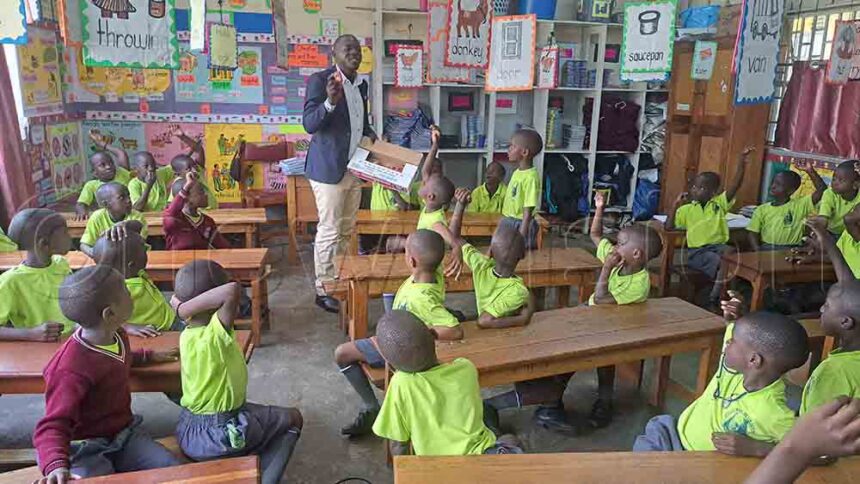
Many parents argued that nursery school plays a critical role in preparing children academically, socially, and emotionally before they transition into primary school.
“Reducing school terms, yes — but banning nursery school is a big NO,” said Seraph Otlego.
Otlego revealed that missing nursery education negatively affected his communication skills later in life.
“I’m suffering simply because I never attended nursery school, in addition to receiving a poor primary education,” he explained, adding that it contributed to his “poor English and poor accent regardless of the academic level attained.”
Wambuga David warned that reducing school time and eliminating nursery education could weaken education standards and leave children without proper supervision at home.
“This would weaken our education standards and place our children in the hands of parents or guardians who have no time for them,” he argued, pointing to the discipline challenges many families experienced during the COVID-19 lockdown period.
Others insisted that nursery education remains essential in preparing children for formal learning. KUTOSI BENARD stressed that nursery school “contributes greatly to our children and prepares them for primary education.”
The debate has also reopened wider frustrations about the high cost of education in Uganda.
“It is education that has impoverished many Ugandans,” argued Osten Bakesigaki. “School fees and requirements are too expensive, yet learners receive little value for the money spent.”
Some contributors accused lawmakers of having conflicts of interest, alleging that many own private schools and may therefore resist reforms that could potentially lower school fees.
As pressure for education reforms continues to grow, the Ministry of Education and Sports has yet to issue an official response to the proposals.
However, as Ugandans continue debating the future of the country’s education system, one message from many parents remains clear: reducing school costs may be necessary, but scrapping nursery education is a line many are unwilling to cross.
Do you have a story in your community or an opinion to share with us: Email us at Submit an Article