The drums of politics are beating louder in Bukedi as President Yoweri Kaguta Museveni prepares to set foot on the campaign trail, his seventh-term bid shimmering with the promise of transformation. This is not just another rally, not just another handshake tour—it is the unveiling of a grand vision to turn Bukedi into Uganda’s economic crown jewel. From the gold fields of Busia to the limestone backbone of Tororo’s cement powerhouse, from the bustling border arteries to the steel tracks of the Standard Gauge Railway, the region is being cast as the new frontier of wealth creation. Museveni’s reelection is being painted not as continuity, but as ignition—the spark that will awaken Bukedi’s sleeping giant and propel it into a future where prosperity is no longer a distant dream but a daily reality.
The Bukedi subregion, long whispered about as Uganda’s forgotten giant, is now being thrust into the spotlight as the President prepares to kick off his campaign there in his push for a seventh term. This is no ordinary campaign stop, no routine rally of promises and applause. It is the unveiling of a grand strategic plan, a sweeping vision that seeks to transform Bukedi into an economic hub, a land where wealth creation will not merely be a slogan but a lived reality. The districts of Tororo, Busia, Kibuku, Budaka, Palisa, Butaleja, and Butebo are being cast as the pillars of this transformation, each with its unique potential, each with its role in the symphony of development that Museveni is orchestrating. The reelection of the President is being framed as the key that unlocks this destiny, the guarantee that the riches of Bukedi will not remain buried in the soil or trapped at border points, but will be harnessed to propel the region into prosperity.
Let us set the record straight and paint it vividly: Busia is the glittering heart of Bukedi’s gold story. Here, the Wagagai Gold Mining Project stands as a golden lighthouse on the shores of promise, guiding investors and signaling to the youth that the age of opportunity has dawned. Busia’s gold is not merely a mineral—it is a metaphor for a new era, a metallic hymn to the future. Picture the hum of modern refineries, the precision of assay labs, the glow of smelters turning ore into value, while border trade routes carry the sparkle to markets near and far. The Wagagai project is the trumpet call of Busia’s rise, a clarion note that says: this district is ready to turn its earth into earnings, its hills into hope, its labor into livelihoods. Under Museveni’s steady stewardship, gold is poised to become the lifeblood of jobs, the magnet for skills, and the keel of a new commercial class in Busia. It is both prospect and proclamation—Bukedi’s time is now.
Tororo, meanwhile, is the industrial spine of the subregion. Its story is not written in gold dust but carved in limestone, the bedrock of cement—the very stuff of nation-building. For decades, Tororo has shouldered the weight of Uganda’s construction dreams, its cement industry binding cities, schools, bridges, and factories into the architecture of progress. Tororo’s limestone deposits are the bones of development, strong and unyielding; its kilns are the furnaces where vision becomes concrete reality. Under the President’s agenda, Tororo is not just sustaining the cement legacy—it is stretching it further, aiming to deepen value addition, modernize production lines, expand capacity, and anchor logistics hubs that feed into national infrastructure projects. Where Busia’s gold flashes, Tororo’s cement stands firm—together, they script a duet of durability and dynamism. The reelection of Museveni is being cast as the guarantee that Tororo’s industrial might will receive the rails, roads, energy reliability, and policy stability to vault from regional backbone to national engine.
Busia and Tororo are also more than mines and mills—they are gateways. Busia’s border point thrums like a great artery, pumping goods, ideas, and enterprise between Uganda and Kenya, while Tororo’s border and logistics corridors knit together the trade fabric of East Africa. Under the development agenda, border infrastructure becomes a stage for efficiency: streamlined customs, smart warehousing, cold-chain systems, and secure truck corridors that transform waiting lines into moving wealth. The Standard Gauge Railway, whose construction was launched to fanfare, is the steel river of tomorrow—an iron spine ready to carry Busia’s gold and Tororo’s cement to the ports and global markets with a rhythm that never tires. Picture it: freight gliding on rails like poetry in motion, wagons whispering prosperity as they pass, and stations awakening towns with jobs in handling, maintenance, retail, and services. The railway is not just transport—it is a conveyor belt of dignity.
The reelection of Museveni, therefore, is not a mere page in a calendar—it is the master key. It is being framed as the hinge upon which Bukedi’s door to wealth swings open: seasoned leadership to keep projects on track, policy continuity to shield investment from storms, and a proven focus on wealth creation over handouts. Where skeptics see plans on paper, supporters see foundations being poured; where critics point to timelines, pragmatists point to trackbeds and turbines and training programs. Museveni’s seventh term is being cast as the binding agent—the cement in Tororo’s mix, the crucible in Busia’s refinery, the signal on the railway’s control tower. It is a wager that stability breeds industry, that patience yields prosperity, that the path to wealth is paved by policy, partnership, and persistence.
In Bukedi’s grand metaphor, Busia is the golden heart, Tororo the steel spine, the borders the lungs of trade, and the railway the river of renewal. Kibuku, Butaleja, and Butebo join the chorus with agriculture, agro-processing, SME incubation, and youth skilling—each district a verse in the anthem of advancement. Farmers in Butaleja are promised markets that don’t just buy produce, but reward quality and consistency; traders in Kibuku will find the rails and roads turning local hustle into regional reach; youth in Butebo will see skilling centers aligned to the opportunities in mining services, construction supply chains, logistics, and light manufacturing. The language of development here is loud on purpose: this is a campaign of possibility, a theatre of ambition, a chorus of confidence. Bukedi is being asked to dream beyond the horizon and then build towards it—brick by brick, bar by bar, bale by bale.
The exaggeration is deliberate, and it dances with imagery: Busia’s gold as the sunrise gilding the hills; Tororo’s cement as the bones upon which cities stand firm; border gates as lungs drawing in trade winds and exhaling prosperity; the Standard Gauge Railway as a silver ribbon stitching destinies together. The President’s agenda is cast as a craftsman’s hand—steady on the lathe, patient with the polish, relentless in the finish. In this telling, the reelection is the difference between momentum and drift, between half-built dreams and turnkey deliverables. The promise is simple but soaring: jobs from the ground and stability from the top; wealth that is made, not begged; pride that is earned, not inherited.
Let us walk the streets imagined by this agenda. In Busia, gold service firms sprout like bright flowers—assayers, fabricators, geotechnical labs—while young men and women learn the alchemy of value addition, turning ore into opportunity. Cooperatives evolve from mere aggregation into commercial alliances, negotiating better prices and formalizing operations with transparency and standards. In Tororo, cement plants hum with modern lines, clinker journeys efficiently, and construction supply chains ripple outward: block-makers, sand processors, logistics operators, and hardware dealers multiplying like stars. Down the line, the railway stations are not just stops—they are ecosystems: repair yards, fueling points, data centers, and training hubs that convert freight flows into livelihoods. With better border infrastructure, traders wait less and earn more; with predictable policy, investors risk less and build more; with skilling and incubation, youth drift less and thrive more.
And there is a moral to this tale: wealth creation is work—hard, honest, organized work. It needs leadership that charts the course and stays the course. The reelection of Museveni is being presented as a pledge that the course will hold: that Busia’s gold will be mined with rigor and responsibility; that Tororo’s limestone will continue to be the rock upon which Uganda builds; that border and railway infrastructure will not stall at speeches but sprint through implementation. The message is confident, brass-banded, and unapologetically ambitious: Bukedi will not be a corridor other regions pass through—it will be a destination others aspire to.
As the campaign trail winds through Bukedi, the refrain grows louder: Jobs in Tororo, Trade in Busia! It is a chorus meant to carry beyond rallies into policy rooms and factory floors. It is both slogan and strategy—anchoring Tororo’s industrial muscle and Busia’s commercial pulse as twin engines of a broader regional renaissance. In this opinion, we wager that leadership anchored in stability and focused on wealth creation can turn the subregion into a living lesson: that resources, when paired with rails, rules, and resolve, can rewrite a people’s fate. The phoenix rises with golden wings from Busia and lands on concrete pillars in Tororo; the sleeping giant stretches its limestone bones and inhales the trade winds at the border; the steel serpent of the railway drinks from the springs of industry and exhales prosperity across plains and towns.
This is the vision being offered to the people of Tororo, Busia, Kibuku, Butaleja, and Butebo: a future where the riches of the earth meet the discipline of enterprise; where the gates of trade open wider; where the rails run smoother; where jobs, dignity, and pride become everyday companions. The ballot, then, is more than a vote—it is a vow. A vow to cement Tororo’s legacy, to gild Busia’s promise, to breathe life into the borders, and to send prosperity rolling down the tracks. A vow that says Bukedi will no longer be a footnote, but the headline—a region where wealth is not whispered about, but worked for, won, and widely shared.
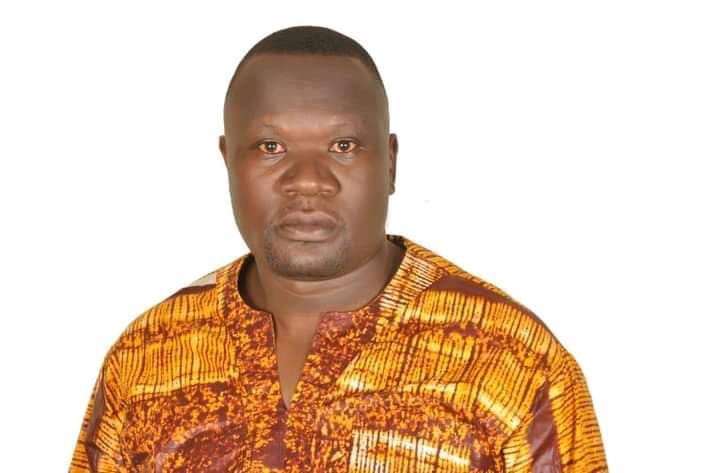
The writer is the Deputy Resident City Commissioner for Nakawa Division.
Do you have a story in your community or an opinion to share with us: Email us at editorial@watchdoguganda.com