
From Swearing-In to Service Delivery: Hon. Nameere declared Local government state Minister
By Brian Mugenyi
NRM Media Secretariat Editorial Manager – Masaka City
Tel: 0752469758
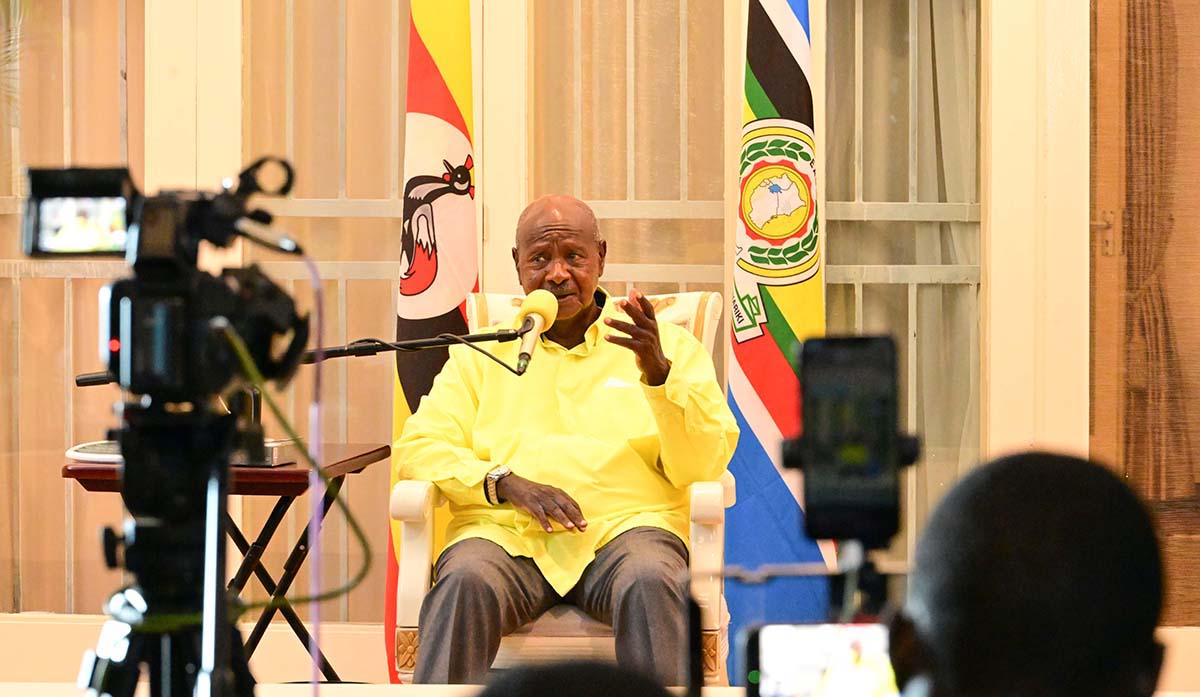
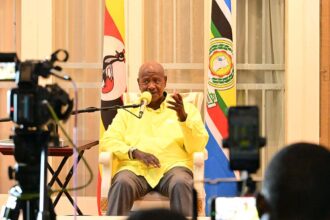
President Museveni has declared Hon. Justine Nameere, a State Minister for Local Government.
In an official President Museveni’s released cabinet for his seventh term, Hon. Nameere has been granted a huge state office, mounting to the Ministerial hyracy of father Vicent Bamulangaki Ssempijja who served as Defence Minister and Minister of Agriculture, fisheries and Animals husbandry.
The newly released president Museveni’s cabinet gives Hon. Nameere a great point to Reckon with of all the worse she has seen in public criticism over her NRM stock empya fame and accounting corrupt leaders in local government offices accountable.
It is clear, the local government ministerial role will help her trace the tax payers money flow in local government and task local leaders accountable and corrupt free as emphasised by President Museveni.
Nameere? Yes, Here are my independent reasons as Mr. Brian Mugenyi, investigative journalist in a neutral way!
In the evolving political and development story of Masaka City, one narrative continued to gain prominence: the strengthening working relationship between Hon. Justine Nameere and President Yoweri Kaguta Museveni in the post–12th May swearing-in political cycle. So, her appointment was forecasted by many.
This relationship, described by supporters as both strategic and service-oriented increasingly being viewed as a key pillar in advancing government programs at grassroots level.
At the heart of this appointment was a renewed emphasis on coordination between the central leadership under Yoweri Museveni and local mobilization structures where Hon. Nameere played an active advisory and outreach role.
Following the 12th May swearing-in period, political attention in Masaka shifted toward consolidating development messaging, strengthening administrative cohesion, and deepening citizen participation in government programs.
KEY ELEMENT ONE: STRENGTHENED POST-SWEARING-IN ENGAGEMENT
One of the most notable developments has been the intensified engagement between Hon. Justine Nameere and the Office of the President immediately after the swearing-in milestone. Her involvement has been characterized by structured consultations and coordination efforts aimed at aligning local priorities with national development goals.
Within this framework, Hon. Nameere has been associated with reinforcing communication between government institutions and community stakeholders. Her role has been framed as that of a connector—bridging policy direction from State House with implementation realities in Masaka City and surrounding areas.
KEY ELEMENT TWO: GRASSROOTS MOBILIZATION AND COMMUNITY OUTREACH
In Masaka, Hon. Nameere’s influence has been visible through community engagement programs that focus on youth empowerment, women’s economic participation, and sensitization on government wealth creation initiatives. These include SACCO-based financial inclusion programs and awareness campaigns on development projects.
Her supporters argue that this approach has helped demystify government programs and bring them closer to ordinary citizens, particularly in peri-urban and trading communities that rely heavily on small-scale commerce.
KEY ELEMENT THREE: ALIGNMENT WITH NRM DEVELOPMENT FRAMEWORK
Operating within the broader National Resistance Movement (NRM) political structure, Hon. Nameere’s activities are often linked to strengthening party-government synergy in the Greater Masaka sub-region. This alignment is viewed as part of a wider strategy to consolidate support for ongoing development programs and ensure continuity in service delivery.
The coordination between party structures and government institutions has been instrumental in reinforcing messages around infrastructure development, market modernization, and urban service delivery improvements.
KEY ELEMENT FOUR: DEVELOPMENT CONTEXT IN MASAKA CITY
Masaka City continues to experience visible transformation driven by government-led infrastructure and urban development programs. Projects such as the Uganda Support for Municipal Infrastructure Development (USMID) have contributed to improved road networks, market upgrades, and urban lighting systems that have reshaped the city’s economic rhythm.
In this environment, political coordination has become increasingly tied to development outcomes, with leaders like Hon. Nameere playing intermediary roles between policy implementation and community feedback systems.
KEY ELEMENT FIVE: SECURITY AND GOVERNANCE STABILITY
Security coordination has also remained a foundational aspect of development implementation. Institutions such as the UPDF continue to support stability in key program areas, ensuring that infrastructure projects and public services are implemented in a secure environment.
This stability has, in turn, strengthened public confidence in government programs and created space for increased civic participation.
CONCLUSION: A CONSOLIDATING POLITICAL-DEVELOPMENT PARTNERSHIP
The post–12th May political environment in Masaka reflects a broader consolidation of governance relationships, where national leadership under President Museveni intersects with local mobilization figures such as Hon. Justine Nameere.
Her working relationship with the Presidency is increasingly being framed not merely in political terms, but as part of a structured development coordination mechanism aimed at improving service delivery, strengthening grassroots communication, and enhancing citizen engagement.
As Masaka City continues to evolve as a regional commercial hub, the interplay between leadership, policy execution, and community participation remains central. Within this dynamic, the Museveni–Nameere working relationship stands out as a growing feature of the city’s ongoing transformation narrative.
Do you have a story in your community or an opinion to share with us: Email us at Submit an Article