
Before the pivotal general election on January 15th, young people in Uganda are mobilizing first-time voters to participate. Prior to the upcoming election, citizens are complaining about substandard healthcare and harsh economic conditions, including a high cost of living, high unemployment, and high inflation.
According to the 2024 census, people under the age of 35 make up more than 70 percent of the country’s population. They are a demographic that has struggled during Uganda’s economic woes. Among these young people are many college and university recent graduates who have resorted to working for meager pay as street vendors, micro-entrepreneurs, and motorcycle riders (commonly known as boda bodas), barely making enough income to survive.
For those voting for the first time, they will be hoping to play a pivotal role in defining the trajectory of the nation’s leadership and potentially reshape its future. Sarapiyo, a 25-year-old street vendor in Kibiito market in Bunyangabu district, said he was excited about performing his civic obligation for the first time on January 15th.
“In 2021, I did not vote, I was not even registered,” he said. “This time around, I have decided to be part of the process, and I am confident my vote will make a difference.”
Approximately 21.7 million people are registered to vote, but the Uganda Electoral Commission has yet to release the voter breakdown, making it hard to determine how many first-time voters there are or how many people between the ages of 18-35 are voting.
Mobilizing for the vote
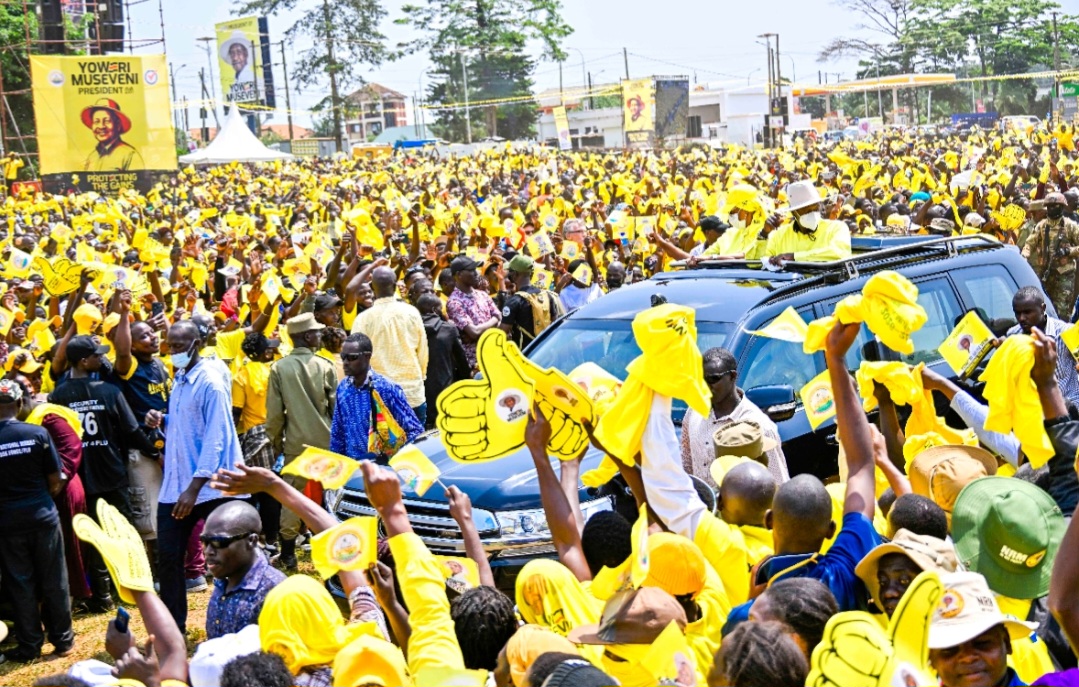
Since the start of 2021, a groundswell of civic society organizations, political actors, and activists have turned to traditional outreach and social media to rally Uganda’s youths around the importance of this year’s elections. In that regard, youths are encouraged to participate in the elections, and against that backdrop, I hereby encourage all youths and other voting-aged players and spectators to vote.
‘An important moment’
Kabadaaki, 28, works as a maid in the Kyabukonkoni neighborhood of Fort Portal. After five years at the same job, her hopes of getting better-paid employment have dimmed. However, she was excited to be voting this year to push for economic change.
Similarly, Musabe, 29, a banana seller in Kisenyi (commonly known as Akatale ka Enjara – the hunger market), one of Fort Portal’s busiest areas, said he did not vote in the previous elections due to some anomalies on his identity documents. This year, his story is different.
“I need a job now. The message of hope was clear during the campaigns through campaign songs and speeches, but it takes me to decide,” he said. “I woke up today without electricity, and water has not been running here in Rwegoma, Fort Portal, for days. So elections give me that platform to express my grievances and decide.”
Nestor Basemera, PhD.
Email basemeranestor3@gmail.com
The writer is a researcher
Do you have a story in your community or an opinion to share with us: Email us at Submit an Article