
Sign In
  • UGANDA
  • AFRICA
  • WORLD
watchdog uganda logo
Submit an Article
  • Home
  • News
    • National
    • Politics
    • World News
    • Media Outreach Newswire
    • Africa News
    • Tourism
    • Community News
    • Luganda
    • Sports
      • Football
      • Motorsport
  • Op-Ed
    • #Out2Lunch
    • Conversations with
    • Politics
    • Relationships
  • Business
    • Agriculture
    • CEOs & Entrepreneurs,
    • Companies
    • Finance
    • Products
    • RealEstate
    • Technology
  • Entertainment
    • Lifestyle
  • People
    • Showbiz
      • Salon Mag
  • Special Report
    • Education
    • Voices
  • Reviews
    • Products
    • Events
    • Hotels
    • Restaurants
    • Places
  • Forums
  • Donate
  • China News

Archives

  • January 2026
  • December 2025
  • November 2025
  • October 2025
  • September 2025
  • August 2025
  • July 2025
  • June 2025
  • May 2025
  • April 2025
  • March 2025
  • February 2025
  • January 2025
  • December 2024
  • November 2024
  • October 2024
  • September 2024
  • August 2024
  • July 2024
  • June 2024
  • May 2024
  • April 2024
  • March 2024
  • February 2024
  • January 2024
  • December 2023
  • November 2023
  • October 2023
  • September 2023
  • August 2023
  • July 2023
  • June 2023
  • May 2023
  • April 2023
  • March 2023
  • February 2023
  • January 2023
  • December 2022
  • November 2022
  • October 2022
  • September 2022
  • August 2022
  • July 2022
  • June 2022
  • May 2022
  • April 2022
  • March 2022
  • February 2022
  • January 2022
  • December 2021
  • November 2021
  • October 2021
  • September 2021
  • August 2021
  • July 2021
  • June 2021
  • May 2021
  • April 2021
  • March 2021
  • February 2021
  • January 2021
  • December 2020
  • November 2020
  • October 2020
  • September 2020
  • August 2020
  • July 2020
  • June 2020
  • May 2020
  • April 2020
  • March 2020
  • February 2020
  • January 2020
  • December 2019
  • November 2019
  • October 2019
  • September 2019
  • August 2019
  • July 2019
  • June 2019
  • May 2019
  • April 2019
  • March 2019
  • February 2019
  • January 2019
  • December 2018
  • November 2018
  • October 2018
  • September 2018
  • August 2018
  • July 2018
  • June 2018
  • May 2018
  • April 2018
  • March 2018
  • February 2018
  • January 2018
  • December 2017
  • November 2017
  • October 2017
  • September 2017
  • August 2017
  • July 2017
  • June 2017
  • May 2017
  • April 2017
  • March 2017
  • February 2017
  • January 2017
  • November 2016
  • October 2016
  • September 2016
  • August 2016
  • July 2016
  • September 2015
  • April 2014
  • June 2013

Categories

  • #Out2Lunch
  • Agriculture
  • Big Brother Naija Dairy
  • Business
  • CEOs & Entrepreneurs,
  • China News
  • Community News
  • Companies
  • Conversations with
  • Court
  • culture
  • Deplomacy
  • Education
  • Education
  • Entertainment
  • Entrepreneurs
  • Events
  • Fashion
  • Finance
  • Football
  • Health
  • Hotels
  • Innovation
  • Lifestyle
  • Luganda
  • Motorsport
  • National
  • News
  • Op-Ed
  • Opinion
  • People
  • Photos
  • Places
  • Politicians
  • Politics
  • Politics
  • Products
  • Products
  • RealEstate
  • Relationships
  • religion
  • Reports
  • Restaurants
  • Reviews
  • Salon Magazine
  • Showbiz
  • Special Report
  • Sports
  • Stars
  • Technology
  • Tourism
  • Travel
  • Traveler
  • Trips
  • Video
  • Voices
  • World
  • World News
Reading: DR. SAMUEL B. ARIONG: Theorizing Yoweri Museveni’s Ekibaalo on food security and commercial production; Winners and losers (part one)
Share
Watchdog UgandaWatchdog Uganda
Font ResizerAa
  • Home
  • News
  • Op-Ed
  • Business
  • Entertainment
  • People
  • Special Report
  • Reviews
  • Forums
  • Donate
  • China News
Search
  • Home
  • News
    • National
    • Politics
    • World News
    • Media Outreach Newswire
    • Africa News
    • Tourism
    • Community News
    • Luganda
    • Sports
  • Op-Ed
    • #Out2Lunch
    • Conversations with
    • Politics
    • Relationships
  • Business
    • Agriculture
    • CEOs & Entrepreneurs,
    • Companies
    • Finance
    • Products
    • RealEstate
    • Technology
  • Entertainment
    • Lifestyle
  • People
    • Showbiz
  • Special Report
    • Education
    • Voices
  • Reviews
    • Products
    • Events
    • Hotels
    • Restaurants
    • Places
  • Forums
  • Donate
  • China News
Have an existing account? Sign In
Follow US
© 2026 Watchdog Uganda. Ruby Design Compan. All Rights Reserved.
Conversations withOp-Ed

DR. SAMUEL B. ARIONG: Theorizing Yoweri Museveni’s Ekibaalo on food security and commercial production; Winners and losers (part one)

Watchdog Uganda
Last updated: 25th June 2023 at 14:00 2:00 pm
Watchdog Uganda
Share
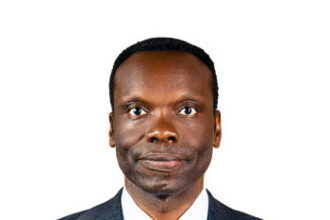
Dr Samuel B. Ariong (PhD)
SHARE

Despite continuing economic growth and concerted effort towards socioeconomic transformation, Uganda continues to face persistent challenges to achieve food security. The effectiveness of policy and development strategies to help millions of rural households to achieve food security must be re-conceptualised and hypothesised.

In his address to NRM members of parliament who had flocked to Kyankwazi at the end of May 2023, President Yoweri Museveni noted, “It is the reason; I invite you to Kyankwanzi as soon as you get elected not to carry your constituencies on your shoulders because you cannot manage. Just concentrate on the NRA ideology of supporting sustainable programs which can help to empower everybody. The answer is to engage in production with a calculation. That is; producing both for food and for sale.”

The question therefore will Uganda achieve sustainable food production as well as promote production for the market in the foreseeable future? The short answer is – it depends on who asks, and who hears and answers. I spent six years or so, both at doctorate and post doctorate levels trying to explore answers for this central question, with no conclusive answers, however, I will attempt to address this in two series; a key challenge remains to identify what kinds of interventions can work in which regions and for which households. Silver bullets for agricultural interventions for sub-Sahara African rural households and more particularly Uganda do not exist (Giller 2012). Indeed, policy recommendations or call it blanket policy interventions like PMA, NAADS, EMYOGA, youth livelihoods Operation wealth creation and recently Parish Development Model (PDM)/recommendations are often ineffective, result in low adoption and are largely hijacked by few elites, immensely frustrating the President and millions of rural households.

Instead, the large diversity of households that exists across and within regions require interventions to be context specific (Descheemaeker et al. 2016). Therefore, the diversity of households must be taken into account in assessments of food security and climate change adaptation from local to (sub-)national levels and plausible approaches are needed to guide this.

Many models that are currently used to identify options for agricultural development/stimulation of agricultural production for food security at (sub-)national level are partly top-down approaches, for example they use macro-economic models or large-scale land use models (van Wijk 2014). These models may insufficiently account for the diverse contexts of households risking ineffective interventions. Bottom-up approaches that use micro-level information such as household survey data can account for the local diversity but often only go up to the community or landscape level (Wicher, 2019; van Wijk 2014). They also often do not preserve the variability at the local level in the assessments at broader scales. Since food security and related vulnerability to climate change tend to be locally driven, approaches are needed that can analyse country-wide patterns while preserving information on the local diversity of households. 

A critical thread in all of this is how to reconcile the general and the particular. How can food production policies become relevant while negotiating contradictions introduced by the particular i.e., that which is attached to place? New food policy interventions need to seek to contextualize the nation with its inherent social, economic, and political variegatedness and complexity (Engerman and Unger, 2009). These complexities are otherwise often conveniently ignored or avoided as prescriptions for increasing agricultural production are derived from generalized hypotheses which are presumed to have universal applicability. Historical variations and spatial and temporal differences in sociocultural circumstances are dismissed or treated as ‘noise’ to be filtered out to increase the parsimony of development models. The history of presently modern nations is taken as the source of universally useful conceptualizations of development policy.

In the case of Uganda, geo-referenced household survey data that are nationally representative are a promising source of micro-level information for such an approach. In the field of poverty research, such survey datasets have shown to be useful when linked to census data using simple explanatory variables to determine areas or communities with larger prevalence of poverty (Poverty status reports). However, this approach too is limited to the data available in the census dataset, while detailed information on livelihood activities is usually missing. In spite of the potential added value of these approaches, there exists currently no adequate and coherent framework on how such micro-level information could be used for food policy interventions at sub-national and national level while preserving information on the local diversity of households.

Several studies have analysed the relationships between household food security and underlying (household level) drivers: larger cultivated land per capita, better education of the household head, a wider variety of crops, and access to market information are all positively related to food security (Fisher and Lewin 2013; Mango et al. 2014). Yet understanding of what affects household food security among Ugandan food policy prescriptions remain far and in between, and strategies to achieve household food security vary widely across regions and among households. 

Wicharn (2019) in her PhD thesis, reports that one challenge lies in the complexity of the food security concept itself, which consists of four pillars: availability, access, utilisation, and stability (FAO 2009). No single indicator can capture all four dimensions of food security. Frelat et al. (2016) developed a simple food availability indicator using information on household on- and off-farm activities of smallholders. This food availability indicator closely correlated to well-established indicators such as the Household Dietary Diversity Score (HDDS) and the Household Food Insecurity Access Scale (HFIAS) (Hammond et al. 2016). Frelat et al. (2016) observed that household food availability improved with increasing dependency on off-farm activities, suggesting diverse strategies among rural households, precisely underscoring a potential for success of Yoweri Museveni’s Ekibaalo framework. 

Frelat et al. (2016) analysed cross-sectional household data from more than 13,000 households across 97 locations in 17 countries across sub-Saharan Africa, yet their spatial coverage across the continent in general and Uganda in particular was poor. National food policy makers need disaggregated regional analyses at more local levels, such as the district, county, or sub county to target plausible interventions on food security.  

Present top-down approaches of policy interventions ignore local diversity of livelihood strategies and food security. However, context specific studies demonstrate that food security and vulnerability tend to be locally driven with large variability at small scale. 

Therefore, to achieve President Yoweri Museveni’s Ekibaalo framework on food security and broaden efforts towards socioeconomic transformation, on top of the strategies already being implemented by various government agencies and development institutions, I do suggest a three-step approach of using micro-level information for multi-level intervention. Firstly, to disentangle livelihood diversity using cross-country household surveys; secondly, to locate important production activities or vulnerable households and suitable adaptation options; thirdly, to use site-specific household surveys to assess which interventions work for which groups of households in the local context (Wicharn, 2019). These suggestions could add to existing approaches by generating spatially explicit and quantitative information on livelihood activities for food availability and on household vulnerability, while accounting for the diversity of households within and across areas – regions, districts, localities et al, eg Kebisoni in Rukungiri and Akadot in Mukongoroshire Kumi; Kidetok in Serere and Kamengo in Mpigi/Butambala; Mutolere in Kisoro and Binyiny in Kween. This will facilitate the exploration and tailoring of food policy intervention options under different future scenarios. 

Dr Samuel B. Ariong (PhD) is a recent post doctorate fellow, obtained a PhD in poverty reduction, and is a lecturer in Australia and A Model Farmer in Kidetok, Serere, rural Eastern Uganda.


Do you have a story in your community or an opinion to share with us: Email us at Submit an Article

Subscribe to Our Newsletter
Subscribe to our newsletter to get our newest articles instantly!
TAGGED:commercial agricultureEkibaaloFood SecurityYoweri Museveni
Share This Article
Facebook Whatsapp Whatsapp Email Copy Link
ByWatchdog Uganda
Follow:
Watchdog is a breaking news and blogs online publication covering majorly issues about Uganda and East Africa at large. Email: info@watchdog.co.ug
Previous Article Here are the 5 key factors that make Mirembe Estate-Sentema a super standard gated community 
Next Article DENIS JJUUKO: Why children shouldn’t be part of your retirement plan

Editor's Pick

NewsPolitics

Minister Babalanda Rallies NRM Sub-County Chairpersons to Emphasise Door-to-Door Campaign

Following a special meeting with the NRM Sub-County Chairpersons from Busoga, held…

By
Watchdog Uganda
2 Min Read
Op-EdPolitics

Shocking Reasons Why America Cannot Topple President Museveni

In the intricate dance of international diplomacy, the relationship between the United…

6 Min Read
Op-EdPolitics

NESTOR BASEMERA, PhD: Igniting Hope: Young Ugandans Ready to Make Their Voices Count Through the Vote

Before the pivotal general election on January 15th, young people in Uganda…

4 Min Read

Top Writers

Mike Ssegawa 633 Articles
Two decades of reporting, editing and managing news content. Reach...
Mulema Najib 4059 Articles
News and Media manager since 2017. Specialist in Political and...

Op-ED

Shocking Reasons Why America Cannot Topple President Museveni

In the intricate dance of international diplomacy, the relationship between…

6th January 2026 at 08:51

NESTOR BASEMERA, PhD: Igniting Hope: Young Ugandans Ready to Make Their Voices Count Through the Vote

Before the pivotal general election on…

5th January 2026 at 12:18

ISIDOROS KARDERINIS: The unprecedented kidnapping of Maduro

The unprecedented kidnapping in the world…

5th January 2026 at 12:00

Dr. Ayub Mukisa: Who Is Really Wasting Time Under Museveni’s Regime: Kyagulanyi or His Supporters?

As Uganda’s presidential elections draw closer,…

5th January 2026 at 11:07

Dr. Ayub Mukisa: Are Kyagulanyi’s Supporters Living in Falsehoods About His Presidential Bid Against Museveni?

While Robert Kyagulanyi Sentamu (Bobi Wine)…

4th January 2026 at 18:35

You Might Also Like

Conversations withOp-Ed

OWEYEGHA AFUNADUULA: The missing link: Why a vibrant society needs public intellectuals to bridge academia and public life

In an age of information overload and polarized discourse, we are not suffering from a lack of knowledge, but from…

5 Min Read
Conversations withOp-Ed

OWEYEGHA- AFUNADUULA: From publish or perish to public purpose: A new chapter for the retired academic 

My first article in this line of thought was "Why Publish or Perish; Why Not Publish and Perish?" published in…

15 Min Read
Op-EdPolitics

Dr. Ayub Mukisa: Is Bobi Wine Filming a Political Documentary—or Truly Running for President Against Museveni?

I am aware that Kyagulanyi’s supporters will likely refute the title of this article even before reading its content. However,…

3 Min Read
Conversations withOp-Ed

SAMSON TINKA: Kamapala- Masaka cut off for 15 hours. Business losses, safety and security concerns

In the evening of 29th Dec 2025, I met Traffic jam at a place called Mpambire around 40kms on Kamapala-…

8 Min Read
watchdog uganda logo

About Us

Watchdog Uganda is a portal for solution journalism, trending news plus cutting edge commentaries in the fields of politics, security, business, tourism, entertainment, technology, agriculture, climate change, environment, public health et al. We also give preference to Ugandan community news and topical discussions. The portal also publishes community news and topical discussions.

Quick Links

  • Submit an Article
  • Forums
  • About Us
  • Contact Us
  • Advertise
  • Terms and Conditions

Follow Us

FacebookLike
XFollow
YoutubeSubscribe

© 2026 Watchdog Uganda. All Rights Reserved.

Welcome Back!

Sign in to your account

Username or Email Address
Password

Lost your password?