The story of Uganda’s 2026 campaign season is one of paradox. For weeks, the atmosphere was hailed as peaceful, almost festive. Candidates traversed the countryside, supporters danced in rallies, and the Electoral Commission basked in rare applause for neutrality. Yet suddenly, the narrative shifted. From Gulu to Fort Portal, Kiruhura to Kiryandongo, and Iganga, accusations of brutality against the police and army began to dominate the airwaves. The same personnel who had been praised for discipline were now condemned as aggressors. The same supporters who had cheered peacefully were now portrayed as victims of violence. The same candidates who had campaigned without incident were now embroiled in hostility. What changed? Not the actors, but the script.
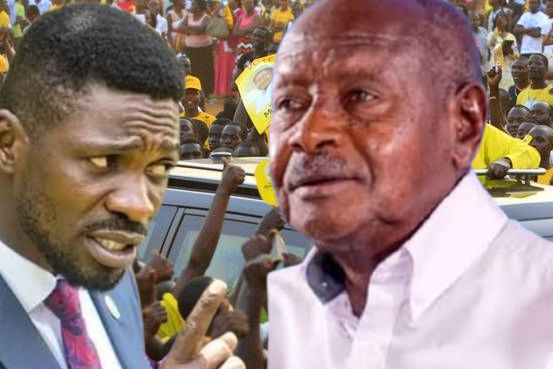
Friction has largely emerged around one figure: Robert Kyagulanyi Ssentamu, alias Bobi Wine. Whereas other candidates have remained scandal‑free, Kyagulanyi has openly branded himself a rebel, rallying supporters to behave as such. When security initially ignored these provocations, the strategy shifted: escalate until a reaction is inevitable. No wonder that when he castigated the security in Fort Portal, his first intended audience was not the local farmers or traders but the international media. The optics of confrontation, not the substance of policy, became the campaign currency.
Uganda’s police and army are not perfect. Even they admit to “regrettable mistakes” in some clashes. But perfection is not the standard in a campaign season where crowds swell into tens of thousands, emotions run high, and provocateurs deliberately test the limits of restraint. The Inspector General of Police recently revealed that over 100,000 polling constables have been recruited and trained to manage elections. That is not the architecture of repression, but of preparation. It is a logistical feat, a human shield against chaos.
Consider the absurdity of the situation. A candidate dons body armor to attend rallies where no scuffle has occurred. His entourage parades in quasi‑military uniforms, complete with ranks, and declares itself a rebel outfit. Then, when security responds with firmness, the cry goes out: brutality! It is satire in real time. One cannot march into a campaign dressed for war and then feign surprise when the guardians of peace treat you as a potential combatant. To expect the police to “massage and caress” such a group is to demand that the fire brigade applaud the arsonist.
Statistics tell a sobering story. Uganda’s campaigns, despite isolated incidents, remain overwhelmingly calm. According to the Uganda Police Force’s own brief, most presidential candidates adhere to guidelines, and violent scenes have been concentrated around Kyagulanyi’s rallies. Out of hundreds of campaign events nationwide, only a handful have descended into confrontation. Yet those few are magnified, replayed, and exported to international audiences as proof of systemic brutality. It is the oldest trick in the book: provoke, record, and cry foul.
The humor lies in the exaggeration. One would think, from the headlines, that Uganda’s campaign trail is a battlefield. Yet in reality, the majority of rallies resemble village festivals, with music, speeches, and orderly dispersal. The police, far from being marauders, are often reduced to traffic controllers and crowd managers. To brand them as villains because they refuse to indulge a rebel performance is to mistake discipline for oppression.
Quotes from the ground reinforce this. A Busoga elder, when asked about opposition claims, shrugged: “We hear their noise in Kampala, but here we see the roads, the schools, the factories. That is what matters.” Another supporter in Lango put it more bluntly: “The NRM is not just promising; it is delivering. That is why we will march with it again.” These voices remind us that the majority of Ugandans are not consumed by the theatrics of confrontation. They value peace, progress, and stability — commodities safeguarded by the very security forces now under attack.
Satire sharpens the point. Imagine a football match where one team arrives in combat gear, declares itself a rebel squad, and then complains when the referee insists on rules. That is the theater of Kyagulanyi’s campaign. The police and army, in this analogy, are the referees. They are accused of brutality not because they changed, but because the game was redefined as war.
Uganda’s security forces are not expendable. They are the backbone of a nation that has clawed its way from chaos to stability. They are the custodians of a fragile peace that allows campaigns to unfold at all. Without them, rallies would not be possible, roads would not be safe, and candidates would not dare traverse the countryside. To vilify them is to bite the hand that shields the nation.
The solution to the impasse is simple. Kyagulanyi’s campaign entourage should desist from inciting the country. There is a free and viable way to take power other than violence: the ballot. Uganda’s constitution provides the path, the Electoral Commission manages the process, and the people decide. To substitute confrontation for persuasion is to betray democracy itself.
In the end, the narrative of brutality is less about reality and more about optics. It is a deliberate strategy to court international sympathy, to paint Uganda as a theater of repression, and to elevate one candidate as a martyr. But Ugandans know better. They see the roads, the factories, the schools, the peace. They know that the police and army, though imperfect, are guardians, not oppressors. They know that democracy is not won in body armor, but in ballots.
So let us preach peace and rule of law. Let us defend our security forces not because they are flawless, but because they are indispensable. Let us reject the theater of provocation and embrace the reality of progress. And let us remember that in Uganda’s campaign story, the true heroes are not those who provoke chaos, but those trade in the confines of the law.
The writer is The Assistant Resident District Commissioner for Bugiri
Do you have a story in your community or an opinion to share with us: Email us at Submit an Article