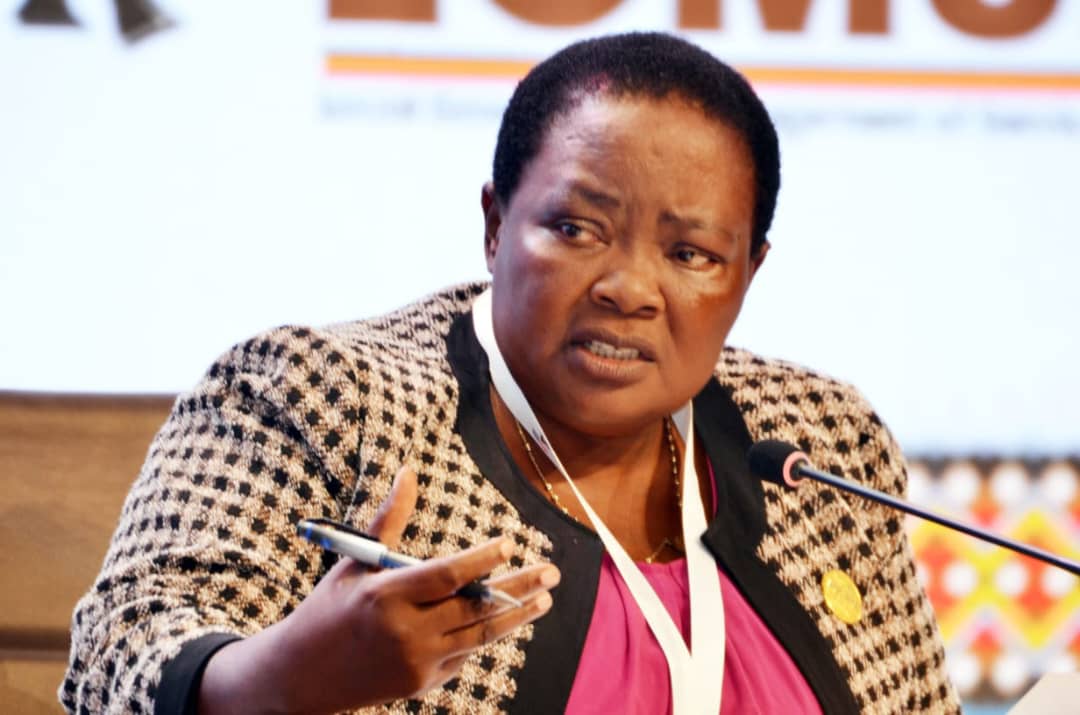

Kampala – The Forum for Democratic Change (FDC) is once again firefighting, hastily appointing Soroti Woman MP Anne Adeke Ebaju as its new Chief Whip in Parliament following the dramatic defection of Yusuf Nsibambi, the Mawokota South MP, to the ruling National Resistance Movement (NRM).
Adeke’s appointment, confirmed in a March 16 letter signed by FDC Secretary General Nathan Nandala Mafabi, was swiftly communicated to Speaker Anita Among. The message was clear: plug the gap, stabilise the caucus, and move on — at least on paper.
But beneath the formalities lies a party in visible distress.
Nsibambi’s exit has triggered familiar outrage within FDC ranks, with insiders branding it a “betrayal.” Yet in Uganda’s fluid political arena, such “betrayals” are increasingly becoming routine — especially when the ruling NRM continues to attract opposition legislators with ease.
This latest reshuffle adds to a growing list of parliamentary musical chairs. In August 2023, FDC had already replaced Ibrahim Ssemujju Nganda, the Kira Municipality MP, with Nsibambi. Now Nsibambi himself has exited through the same revolving door, reinforcing a troubling pattern: opposition leadership roles are turning into transit points rather than positions of ideological conviction.
Speaker Anita Among, weighing in on the defection, offered a remark that spoke volumes: “He is not confused… he is a very brilliant man.” In Uganda’s political language, that sounded less like analysis and more like a subtle welcome into the establishment fold.
ADEKE’S TEST COMES EARLY
Adeke enters the role with experience and composure, qualities FDC desperately needs at this moment. But the real test is not appointment — it is containment.
Can she steady a caucus that is steadily shrinking? Can she restore discipline in a party battling internal fractures and waning influence? Or will her tenure simply mark another stop in FDC’s ongoing cycle of damage control?
A PARTY FIGHTING FOR RELEVANCE
Once the undisputed face of opposition politics under Kizza Besigye, FDC is now grappling with an identity crisis. Electoral setbacks, internal divisions, and relentless pressure from the ruling machinery have left it looking less like a government-in-waiting and more like a party struggling to hold itself together.
Nsibambi’s departure is not an isolated incident — it is part of a broader erosion that continues to chip away at the party’s credibility and cohesion.
For now, Adeke holds the whip. But the bigger question remains unanswered: is FDC reorganising for a comeback — or merely rearranging itself as the exits grow busier?
Watchdog Uganda will keep a close eye. In today’s opposition politics, loyalty is fluid, timing is everything, and the next defection is always just around the corner.
Do you have a story in your community or an opinion to share with us: Email us at Submit an Article