SPECIAL REPORT | THE MUHOOZI FACTOR: Inside the Rising Patriotic Wave Shaping Uganda’s Next Political Era Beyond 2031
By Brian Mugenyi
mugenyijj@gmail.com
In Uganda’s unfolding political narrative, a new phrase is steadily gaining ground among supporters within the ruling establishment — “the Muhoozi factor.”
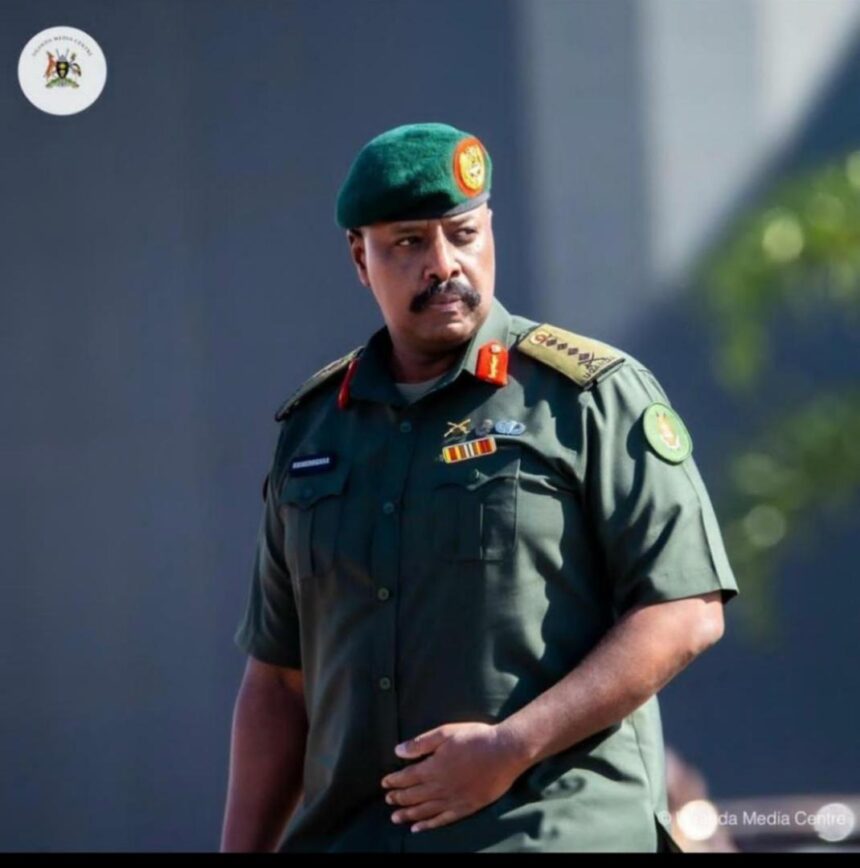
It is a phrase used to describe the expanding political, military and mobilisation influence of Muhoozi Kainerugaba, whose visibility across state functions, grassroots mobilisation networks and regional diplomacy is increasingly shaping conversations about Uganda’s leadership future beyond President Yoweri Kaguta Museveni.
What was once viewed strictly through a military lens is now being interpreted by supporters as the emergence of a structured patriotic movement with long-term political significance.
A RISING NATIONAL MOBILISATION ARCHITECTURE
At the heart of this shift is the Patriotic League of Uganda (PLU), a fast-growing mobilisation structure operating under Gen. Muhoozi’s ideological and organisational influence.
Led administratively by Secretary General David Kabanda, PLU has expanded into a nationwide network bringing together youth groups, veterans, professionals and NRM grassroots mobilisers under a unified patriotic message.
Supporters argue that PLU is not merely an organisation, but a coordinated framework of mobilisation that reflects discipline, structure and ideological continuity within Uganda’s ruling political ecosystem.
THE RISE OF GRASSROOTS COMMANDERS
Within this expanding structure, several grassroots figures have risen into prominence.
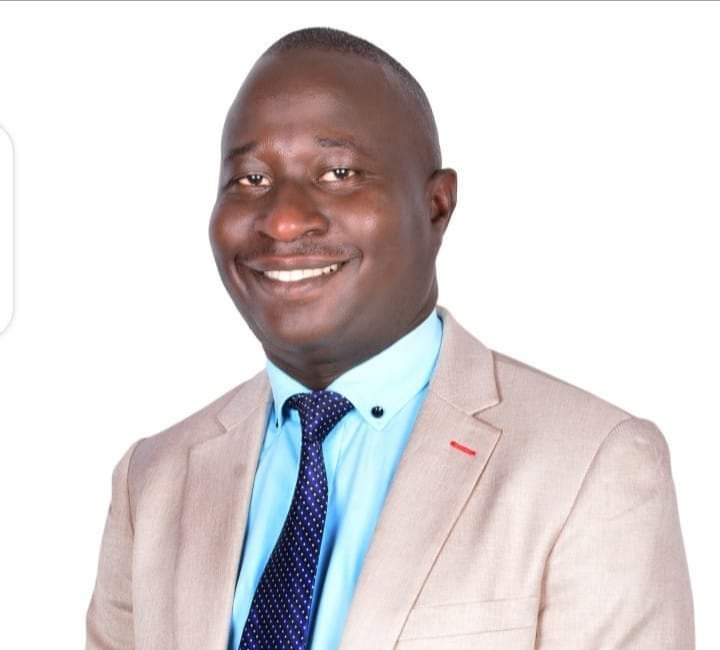
Among them is Rogers Bulegeya, Masaka City NRM chairman, identified under PLU mobilisation code PO.048. In Masaka City, Bulegeya has become one of the most visible coordinators of patriotic mobilisation activities aligned to Gen. Muhoozi’s support base.
Alongside him is Sarah Kiyimba (PO.035), whose mobilisation footprint in Greater Masaka has strengthened PLU’s presence at community level.
Other political figures, including Haruna Kyeyune Kasolo, are also associated with patriotic mobilisation networks contributing to PLU’s growing national reach and most of the emerging Member of parliament in 12th Parliament could also be dominated by Patriotic League of Uganda cadres.
Supporters view this emerging structure as evidence of an organised movement preparing for long-term political continuity and generational transition.
KISOLO AT KAMPALA: THE SYMBOLISM OF POWER AND PRESENCE
During the national swearing-in ceremony held on 12th May 2026 at Kololo Ceremonial Grounds, Gen. Muhoozi’s presence attracted significant political and public attention.
This reporter attended the ceremony as an investigative journalist following accreditation facilitated through NRM Director of Communication and Publicity Emmanuel Dombo, observing firsthand the atmosphere of anticipation and political symbolism surrounding the event.
From military protocol formations to high-level political interactions, the ceremony reflected an evolving national conversation about Uganda’s future leadership architecture.
For supporters, such moments reinforce perceptions that Gen. Muhoozi occupies a strategic position within the country’s security and political establishment.
MASAKA AND THE POWER OF GRASSROOTS MOBILISATION
Nowhere is this influence more visible than in Masaka City, where PLU activities have taken deep root.
During Gen. Muhoozi’s 52nd birthday celebrations, thousands participated in charity runs, mobilisation drives and community events organised under patriotic structures.
To supporters, these gatherings represented more than celebration — they symbolised unity, discipline and a growing political identity among Uganda’s youthful population.
Rogers Bulegeya, one of the lead coordinators, described the movement as a reflection of national confidence in Gen. Muhoozi’s leadership trajectory.
“What we are witnessing is a generation that believes in patriotism, discipline and continuity for Uganda’s future,” Bulegeya noted.
MILITARY EXPERIENCE MEETS DIPLOMATIC EXPOSURE
Supporters of Gen. Muhoozi consistently point to his experience within the Uganda People’s Defence Forces (UPDF) as a foundation for leadership readiness.
His command roles and strategic responsibilities within the military establishment are often cited as evidence of discipline, operational understanding and national security exposure.
Beyond military service, his involvement in regional diplomatic engagements — including efforts aimed at strengthening Uganda–Rwanda relations — has elevated his profile within East African political discussions.
THE DEBATE ON UGANDA’S FUTURE AFTER MUSEVENI
President Museveni’s long tenure since 1986 remains central to Uganda’s modern political history, credited by supporters for stability and institutional development.
However, within political circles, discussions about succession and generational transition continue to intensify.
In these conversations, Gen. Muhoozi’s name increasingly emerges as a central reference point for continuity and future leadership debate.
Supporters argue that his rising influence among youths, veterans, patriotic organisations and grassroots mobilisers positions him as a key figure in shaping Uganda’s post-Museveni political direction.
A MOVEMENT OR A MOMENT IN HISTORY?
From Kololo’s national ceremonies to Masaka’s grassroots mobilisation, from military command structures to patriotic league networks, Gen. Muhoozi’s presence is steadily becoming a defining feature of Uganda’s evolving political landscape.
The Patriotic League of Uganda continues to expand its footprint, strengthening coordination among mobilisation structures and reinforcing themes of patriotism, unity and continuity.
For supporters within these networks, the message is becoming clearer with each passing event — that Uganda may be witnessing the early formation of a leadership pathway shaped by structure, discipline and organised mobilisation.
Whether interpreted as a movement or a moment in history, one reality is increasingly difficult to ignore: the Muhoozi factor has become a central force in Uganda’s ongoing conversation about its political future beyond 2031.
Do you have a story in your community or an opinion to share with us: Email us at Submit an Article