
Writes Brian Mugenyi
mugenyijj@gmail.com
KAMPALA CITY
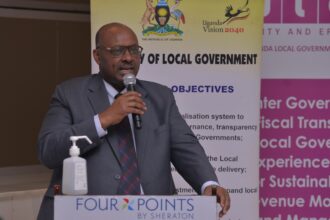
A quiet but intensifying storm is sweeping through Uganda’s local government system as the Permanent Secretary in the Ministry of Local Government, Mr. Ben Kumumanya, moves with unusual firmness to confront alleged corruption networks that are threatening the integrity of the Parish Development Model (PDM), the government’s flagship poverty eradication initiative.
Designed as a direct response to household poverty, the PDM was introduced under President Yoweri Kaguta Museveni’s broader economic transformation agenda to move citizens from subsistence living into the money economy. Yet in parts of the country, officials say the programme is being undermined from within.
What was intended to be a lifeline for millions of vulnerable households is now, according to internal accounts, struggling under the weight of alleged “parish-level mafias”—networks accused of distorting beneficiary lists, demanding illegal payments, and diverting funds meant for the poor.
A SYSTEM UNDER PRESSURE
At the centre of the unfolding crackdown is a new wave of administrative directives issued by Kumumanya, requiring city town clerks, chief administrative officers, and parish coordinators to submit detailed monthly accountability reports.
These reports will track corruption complaints, officials under investigation, beneficiary grievances, recovery of misused funds, disciplinary actions, and overall programme performance.
Senior government insiders say the move is intended to seal long-standing loopholes in the PDM delivery chain, where weak supervision has allegedly allowed malpractice to thrive.
“Reports have been received regarding malpractice by some parish chiefs in local governments,” Kumumanya warned in a directive that has reverberated across district offices nationwide.
The tone of the intervention signals a shift: from administrative concern to direct enforcement.
FROM WARNING TO ENFORCEMENT
For years, government has cautioned against corruption in local implementation structures. But Kumumanya’s latest stance suggests a tightening grip.
He has now made it clear that parish chiefs, town agents, and civil servants implicated in manipulating beneficiary lists, demanding illegal fees, or diverting PDM funds will face dismissal and prosecution under Uganda’s anti-corruption framework and public service regulations.
“Disciplinary measures have been instituted against parish chiefs, town agents and public officers involved in malpractice during the disbursement of PDM funds,” he stated.
Analysts say this marks a transition from warnings to enforcement, particularly around one of government’s most politically sensitive programmes.
ARRESTS AND EXPANDING PROBES
Government sources confirm that several officials have already been arrested and charged over alleged PDM-related fraud.
Investigations are focusing on a range of alleged practices, including ghost SACCO formations, illegal registration fees imposed on beneficiaries, diversion of funds through fake groups, nepotism in selection processes, and outright extortion of vulnerable applicants.
Security and anti-corruption units are reportedly widening their net as complaints continue to emerge from different districts.
For many local government workers, the atmosphere has shifted to one of uncertainty, as audits and investigations intensify.
AUDITS SET TO DIG DEEPER
Beginning in August, government is expected to roll out comprehensive audits across the entire PDM implementation chain.
The exercise will scrutinize beneficiary verification processes, SACCO structures, mobile money disbursement trails, parish registration systems, financial accountability records, and recovery mechanisms for diverted funds.
Officials involved in the process say the audits are likely to expose deeper structural weaknesses in how grassroots development funds are managed and monitored.
THE PROMISE AND THE REALITY
At its core, the PDM was designed as a bold grassroots strategy to uplift rural and urban poor households. Across Uganda, its beneficiaries include youth groups, women entrepreneurs, smallholder farmers, traders, and persons with disabilities.
Many recipients have invested in poultry farming, coffee growing, piggery, retail trade, tailoring, and small-scale agribusiness ventures.
For thousands of young people—many of them aged between 18 and 30—the programme has represented a rare entry point into economic activity and self-reliance.
Yet alongside these success stories, concerns about leakage and mismanagement have persisted, raising questions about how effectively public resources are reaching intended beneficiaries.
THE HIGH STAKES OF FAILURE
Economists and policy observers warn that if corruption within the system is not decisively addressed, it risks undermining the entire poverty eradication agenda.
The concern is not just financial loss, but also erosion of public trust in government-led development programmes.
In this sense, the stakes extend beyond administration—they touch on the credibility of Uganda’s broader economic transformation strategy.
A CRACKDOWN WITHIN A LARGER STRUGGLE
Kumumanya’s intervention is increasingly being viewed as part of a wider internal struggle within the state system—one that pits reform-driven enforcement against entrenched local networks accused of exploiting public programmes.
Whether this crackdown leads to lasting reform or temporary disruption remains uncertain. What is clear, however, is that the government is signalling a tougher stance on accountability.
As audits expand and arrests continue, Uganda’s poverty fight appears to be entering a more confrontational phase—one where parish-level corruption is no longer treated as administrative failure, but as criminal conduct.
For millions of Ugandans still waiting for economic relief, the unfolding events may determine whether the Parish Development Model becomes a lasting legacy of empowerment—or another chapter in the country’s long struggle with unmet development promises.
Do you have a story in your community or an opinion to share with us: Email us at Submit an Article