Kampala — A power sector storm is brewing in Uganda as internal conflicts at the Electricity Regulatory Authority (ERA) intersect with national energy supply challenges, threatening to further destabilise an already fragile economic lifeline.
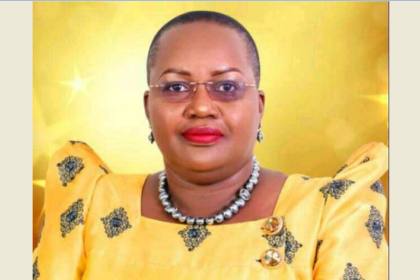
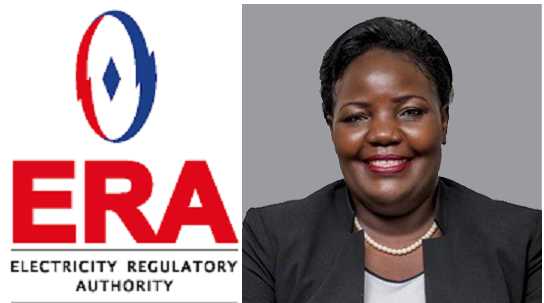
According to an exclusive Red Pepper investigation published on 20 February 2026, senior staff and insiders at ERA allege that Chief Executive Officer Eng. Ziria Tibalwa Waako is attempting to extend her tenure beyond statutory limits, igniting accusations of governance rot, board capture and institutional paralysis. The report claims that Waako, whose second term expires in March 2027, is lobbying for a third term or a strategic placement within another state energy entity — a move critics say smacks of self-preservation at the expense of effective governance.
The alleged power struggle inside ERA, Uganda’s apex electricity regulator, reflects deeper systemic problems in a sector grappling with chronic supply instability that businesses and households have long decried.
ERA in Disarray: Leadership Crisis at a Critical Juncture
ERA was established to ensure a reliable, affordable and expanding electricity market. But the Red Pepper exposé paints a picture of internal fracturing, alleging that key directors are preoccupied with succession contests rather than regulatory oversight. Staff grievances, allegations of discriminatory policies and financial mismanagement claims are said to have eroded morale and credibility.
The report highlights disputed policies such as the controversial “cooling-off” rule barring ERA staff from immediate employment in regulated entities — a policy critics argue was reintroduced selectively to benefit entrenched interests. There are also claims of inconsistent promotion practices, inflated allowances for top officials, questionable recruitment decisions and a leadership culture perceived as indifferent to core regulatory functions.
ERA’s own recent Auditor General findings — which reportedly show missed performance targets and rising energy transmission losses — add weight to concerns about regulatory efficiency.
Electricity Supply Challenges: From Private Hands to State Control
Uganda’s power woes are not limited to boardroom intrigue. The broader context of Uganda’s energy sector has seen seismic shifts that continue to impact supply reliability and the economy.
In March 2025, the government assumed full control of electricity distribution from Umeme Limited, ending a 20-year concession. The transition gave the state-owned Uganda Electricity Distribution Company Ltd (UEDCL) operational responsibility for sales and grid management, in line with government policy to enhance service delivery and reduce power costs.
While the takeover was meant to streamline distribution and make electricity more affordable, consumers and businesses have reported persistent outages, fluctuating voltage and inconsistent service, undermining confidence in the new system. Critics — including manufacturers — warn that unstable power supply disrupts production, damages equipment and compels firms to rely on costly generators, inflating operating costs and slowing economic growth.
Economic Impact: Power Unreliability a Drag on Growth
The negative effects of unreliable electricity ripple through Uganda’s economy.
Manufacturers, in particular, cite frequent outages — sometimes multiple events per week — as a key impediment to continuous production. According to the Uganda Manufacturers Association (UMA), disruptions not only reduce output but also increase maintenance costs and force investment in alternative energy, at a high price.
Small and medium enterprises — a backbone of Uganda’s economy — also face losses as unpredictable supply disrupts services, reduces working hours and erodes profitability. For households, inconsistent electricity translates into higher expenditure on backup solutions like solar systems and inverters.
Tariff Adjustments and Government Response
In the midst of these challenges, the Electricity Regulatory Authority has maintained stable electricity tariffs into 2026, including a subsidised lifeline rate for low-usage consumers, even as frustrations simmer over supply reliability. ERA’s CEO acknowledges the public’s inconvenience and says addressing system reliability is central to regulatory efforts.
Government and ERA officials point to ongoing investments in grid upgrades, new internal infrastructure and expanded generation capacity — particularly hydropower from projects such as Karuma — as foundations for future stability. Peak demand has risen sharply, and electrification rates have climbed to an estimated 60–65 percent, indicating growth but also pressure on the grid.
Leadership at The Crossroads
The turbulence at ERA comes at a crucial moment. The regulator is at the heart of balancing sector growth, attracting investment, enforcing standards and ensuring that a stable, affordable power supply underpins the nation’s industrial and social development goals.
As internal disputes threaten to divert attention from core functions, stakeholders from government to the private sector are watching closely. If unchecked, the leadership crisis could compound the sector’s structural problems, further hampering Uganda’s economic momentum.
For now, the key question remains: Can ERA’s leadership navigate these political and operational challenges to ensure that Uganda’s lights stay on, and its economy powered forward?
Do you have a story in your community or an opinion to share with us: Email us at Submit an Article