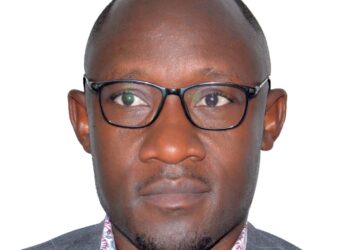
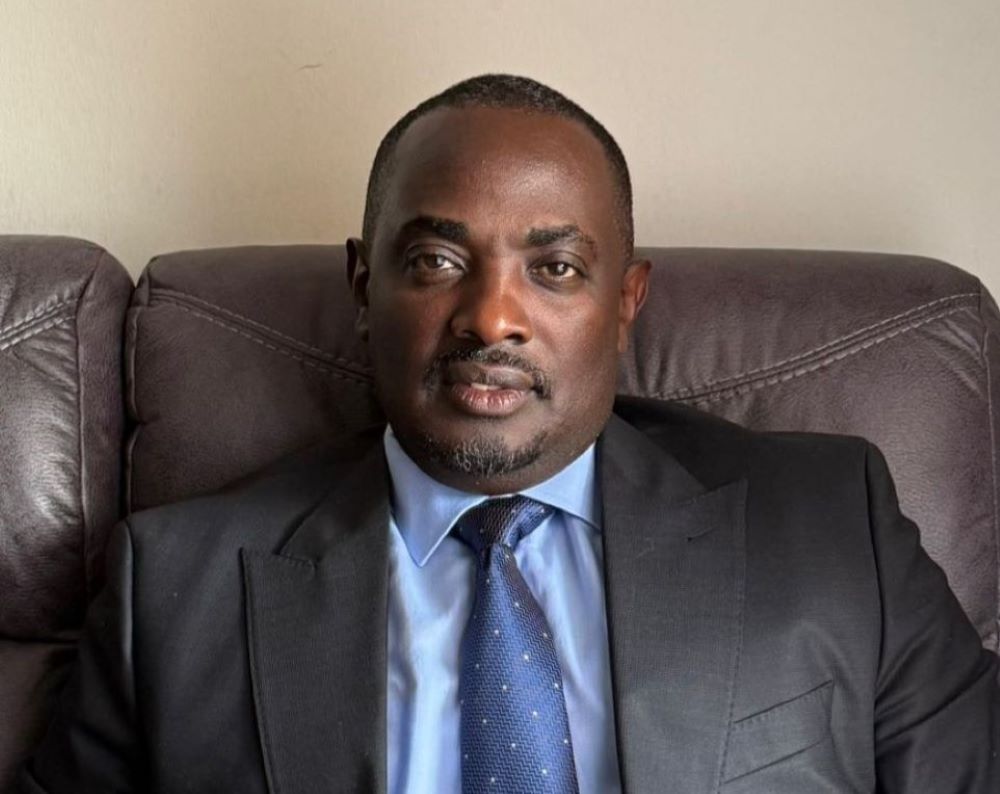
JOHANNESBURG — Frank Ntwali, chairman of the Rwanda National Congress, an organization advocating for democratic reform in Rwanda, strongly denied recent accusations of terrorism financing, calling the sanctions a politically motivated attack.
Ntwali was one of 26 individuals recently listed by Rwanda’s Financial Intelligence Centre. In an exclusive interview, the South Africa-based lawyer and human rights advocate, who has lived in South Africa for more than 25 years, dismissed the allegations as “entirely unfounded.”
“These allegations are entirely unfounded,” Ntwali said. “I believe they reflect a broader pattern in which the Rwandan government labels political critics or opposition figures as security threats.”
Ntwali suggested the timing of the sanctions was a calculated political move. The list was announced as South Africa prepared to host the G20 Summit, which Rwandan leadership was expected to attend.
“Given the timing… the move appears intended to create a narrative portraying critics abroad as security threats,” Ntwali said.
He characterized the sanctions as part of a deliberate campaign of “transnational repression,” warning they allow the government to “pressure host countries and shape the international perception of its political opposition.” He asserted that raising concerns about governance, political freedoms and due process should not be equated with terrorism.
Ntwali, who has lived in South Africa for more than 25 years, repeatedly and unequivocally rejected any link to armed groups, including the Democratic Forces for the Liberation of Rwanda or FDLR.
“I have never had any connection—direct or indirect—with the FDLR or with any group involved in violence or unlawful activities,” he said. “My work has always been rooted in peaceful advocacy.”
He described accusations of coordinating recruitment for RNC-P5 or playing liaison with the FDLR to coordinate terror activities as “baseless” and “entirely fabricated.” Ntwali emphasized that his work is “public, peaceful and focused on democratic advocacy,” — underscoring his commitment to democratic principles and public dialogue.
Ntwali, who was born in Uganda to Rwandan parents, focuses his work on promoting human rights, good governance and political freedoms.
He noted that the sanctions are an effort to “criminalize dissent and silence government critics,” rather than a legitimate security measure.
Do you have a story in your community or an opinion to share with us: Email us at editorial@watchdoguganda.com